Do I Have a Red Nose or Blue Nose Pitbull
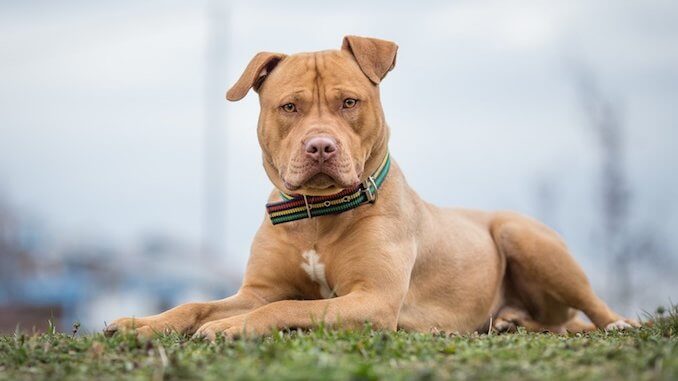
With all the media attention that pit bull breeds get, I'm sure most of us would be pretty confident in identifying this dog immediately.
The name pit bull seems to have morphed into a macro-category used as a metaphor to describe dangerous dogs. How could this confusion happen? Let's delve a little further into this dog.
What is a Pit Bull?
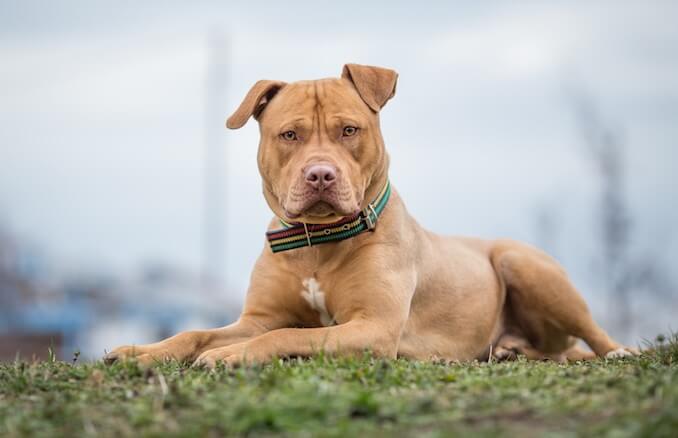
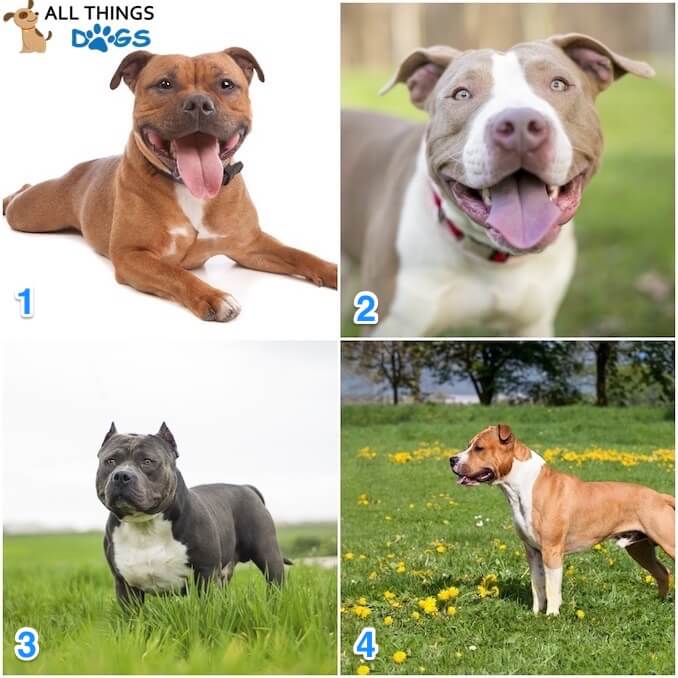
They are a type of dog (not a specific breed), which is often used to classify a number of purebred and mixed breed dogs. Within this type of dog there are a number of pit bull breeds including:
- Staffordshire bull terrier
- American pit bull terrier (APBT)
- American bulldog
- American Staffordshire terrier
Types of pit bull dogs first originated in Britain.
With their history, these dogs have earned a a place on the top 10 most dangerous dogs list and are banned in a large number of states and municipalities across the US, largely erasing their history of being known as a nanny dog.

They carry a contagious zest for life which always brightens your day. Had a rubbish day in work? Nothing will beat that smile that welcomes you through the door.
Pits are intelligent and love to please. This makes them trainable and obedient; this is actually their downfall. Pitties will do whatever you ask them to, this is how they get themselves into the wrong hands. If you train them to collect the mail, they will. If you train them to fight, they will.
Whilst we have mentioned that they are a type of dog, we need to get specific with regards to purebreds, mixed breeds and hybrids. American pit bull terriers are a type of pit bull too. We will now discuss the various pit bull breeds and types of pit bulls which fall under this classification to help you understand.
American Pit Bull Terrier (APBT)
The APBT is a purebred dog, but, due to its checkered past is not recognized by the American Kennel Club.
The APBT stands taller than some of the other pit bull breeds, usually around 6-8 inches taller than a Staffordshire Bull Terrier.
Many breeders argue that the only true Pittie dog is the APBT. Most breed specific legislation applies to the APBT and the American Staffordshire Bull Terrier.
Under the APBT, you may notice that some dogs are named either a red nose pit bull or a blue nose pit bull. These aren't a separate breed, they are just a particular color of the purebred dog.
They still have all the same qualities and characteristics, if anything, because they can be more sought after, over-breeding can result in more prevalent health problems.
Red Nose Pittie
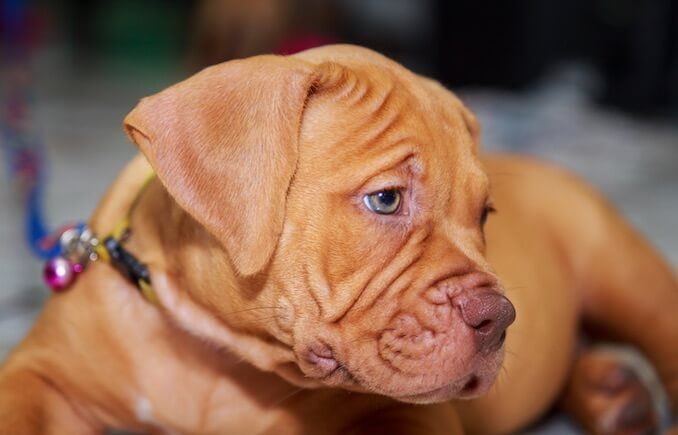
You will easily spot a red nose pit bull from birth; they will have red/copper/brown tones to their fur, nose, eyes and toenails.
Often described as a rare breed, you will notice that the price tags for these incredible dogs are on the high side.
Aside from the color, they really are just like all the other APBTs; intelligent, trainable, loyal and gentle.
They suit most families if they have experience of large, powerful dogs. Give them time and patience, for training and socialization and they will give you their whole heart.
Bluenose Pittie

Just like the red nose, you can easily spot one of these guys too; the blue nose pit bull is just that. They will have blue and grey tones to their fur, eyes, toenails and noses!
Again, as a more sought after color, their price tags can be equally as high as a red nose.
Not boasting anything different to the rest of the Pitties, these fun loving guys just adore their family.
They thrive when they are busy, exercising or playing in the yard.
The downside of the Bluenose is their health. As the blue and grey hues are caused by a recessive gene resulting in low melanin levels, it can cause a range of health problems including a weakened immune system, deafness, cataracts, alopecia and a range of heart problems.
Bear in mind that both the red nose and the blue noses are as a result of breeding blue noses with blue noses, and red noses with red noses to result in the desired color.
The gene pool for both types could potentially be small which can result in more prevalent health issues.
Different Types of Pit Bull Mix Dogs
Widening the gene pool, there are some very popular pit bull breeds which are a pit bull mix (i.e. a cross breed).
Rottweiler Pit Bull Mix
A Rottweiler and pit bull mix can be result in a hybrid dog which is loyal, loving and affectionate.
The Rottweiler Pittie Mix is not a purebred dog but as a result of mating a purebred Rottweiler with a purebred APBT.
We end up with this hybrid dog when we cross-breed a Pittie with a Rottweiler. The result? An incredibly strong and loyal companion known as the Pitweiler.
A muscular dog which some say presents as intimidating couldn't be further from the truth. When trained and socialized from an early age, you end up with dog yoga by your feet and the biggest smile greeting you.
Whilst it's impossible to completely predict the temperament from a hybrid dog, both parent dogs have very similar characteristics; loving and confident.
It is worth noting that Rottweiler's are renowned for sometimes being aloof! You may end up with this quality in your pitweiler. This can throw a cat amongst the pigeons during training sessions.
For more tips on training your pitweiler, take a look at our article on the pitweiler.
Pit Bull Husky Mix
Pitsky dogs are bred by mating a male pit bull (i.e. sire) with a husky (i.e. Dam).
We also have another favorite pit bull mix; the pitsky. This is when a pit bull is mated with a husky (this can be an Alaskan husky or a Siberian husky).
Here, we end up with a playful and affectionate mix of intelligence and cheekiness.
These hybrids are best suited to busy households with an active lifestyle. As with any hybrid, they could retain characteristics from either parent. A bored Husky will dig, chew and howl; they are also master escape artists.
If your pitsky is more husky like, you have to take these behaviors into consideration. Whilst not for the faint hearted, they are an affectionate and enthusiastic mix who will certainly keep you on your toes.
To learn more about if the pitsky is the right dog for you, take a look at our full article and breed analysis.
Which Is The Best Pit Bull?
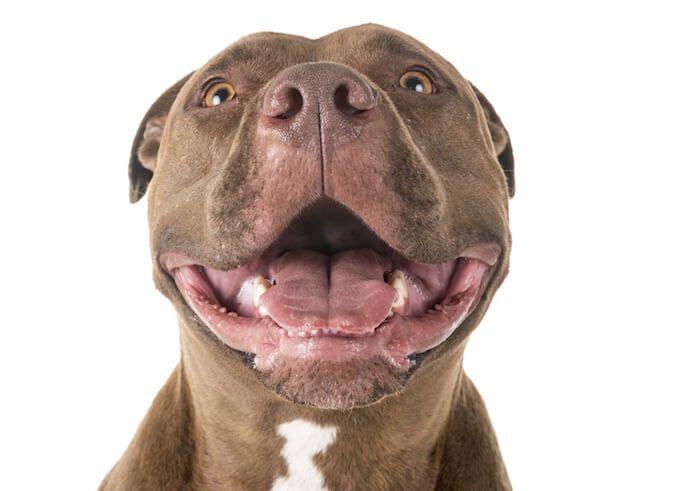 If you have experience of large, powerful dogs and have the time and patience to give, what you receive in return is invaluable.
Pitties are loyal, gentle and wear their heart on their sleeve. A dog which carries a contagious zest for life.
We know they get a have a bad reputation, which may take generations to remove, and face bans or restrictions in multiple US cities. We also know that they are involved in the most dog bite related fatalities compared with any other breed.
But, we also know that when temperament tested by the American Temperament Test Society, Pitties pass 87% of the time.
The American Temperament Test Society Temperament Test simulates a dog walk to trigger various experiences to understanding a dog's ability to different between non-threatening and threatening scenarios. A fail would be aggression in a non-threatening scenario, panic (and no recovery) or strong avoidance (e.g. shyness).
We're not breed-ist, but looking at a comparable sample size, the Schnauzer had a pass rate of 77%.
What we will say, with a pure bred Pittie, you've got more of a chance of predicting their characteristics and temperament. With a hybrid, you never really know what you'll end up with. You may end up with more Pittie than Husky, or more Rottie than Pit.
7 Pit Bull Facts and Myths
| | Fact | |
| 1 | They are involved in the most dog bite related injuries | True, however, they also pass the American Temperament Test Society's test 87% of the time. |
| 2 | They are banned or restricted in a number of states or municipalities in the US. | True. They are banned in 1089 cities across the US and there is breed specific legislation including bans or restrictions on pit bulls. |
| 3 | They are aggressive | True – every dog has the potential to be aggressive. Aggression in dogs is defined as the threat of harm including, snarling, growling, barking, lunging or biting. These behaviors aren't specific to pit bulls, studies have shown, the most common cause of aggression in dogs is fear and anxiety; those are emotions that every dog can feel. |
| 4 | They are actually really trainable | True – Bull terriers come in as an average working dog, who in general will learn a new trick after 25-40 repetitions compared against a Shih Tzu; who on average takes 40-80 repetitions. |
| 5 | They make incredible working dogs | True – Take the story of Weela who, when the river of Tijuana flooded, guided search teams through the flood to save victims and carried food and resources to those stranded! For this great service she received the Dog Hero of the Year Award. |
| 6 | Pitties do actually smile! | Well, as we've mentioned in do dogs smile?, science isn't entirely sure if dogs smile, but, ask any Pittie owner and we reckon they do. |
Summary
Hopefully, by now, you understand the Pittie is not a specific breed of dog, but, a general classification used to describe lots of different purebred and mix dogs. Most commonly, when discussing pit bull breeds, people mean the APBT.
However, there are also other purebred dogs which are types of pit bulls, such as the Staffordshire bull terrier or the American Staffordshire terrier.
Finally, we can get a pit bull mix dog which is normally a APBT mated with another breed of dog (e.g. Pitsky).
Whilst we've discussed all of the positive attributes of the faithful Pit, we just ask that you are realistic with your capabilities as a dog handler.
Their high intelligence makes them responsive to training and with early and continued socialization, these guys are loving and playful family dogs. The problem is when they get into the wrong hands; whether this be for totally barbaric reasons, or simply that owners don't have the time to spend with them.
Time, patience and love are all these guys want; in return they will give you their heart (and steal yours in the process).
Would you rather a purebred, a mix, or none at all?! Let us know with a comment below.
Source: https://www.allthingsdogs.com/pitbull-breeds-and-types-of-pitbulls/
0 Response to "Do I Have a Red Nose or Blue Nose Pitbull"
Postar um comentário